
Get the Scoop: Rent Control vs. Rent Stabilization
As we head into February, I’m reaching out with a policy deep dive on Rent Stabilization.
To clear up any confusion right away: Rent stabilization is NOT a ban on rent increases. It ensures that rent growth is predictable and fair, so a sudden 30% hike doesn't turn a family's life upside down.
The housing crisis is complex, and we need every tool in our toolbox to address the invisible market forces driving up Boston’s housing costs. Today, more than half of Boston renters are "cost-burdened," paying over 30% of their income just to keep the lights on and a roof overhead. Even more staggering, 1 in 4 renters are handing over more than half their entire paycheck to their landlord.
On January 28, 2026, I officially filed a resolution at the Boston City Council to back the 2026 statewide initiative: "An Initiative Petition to Protect Tenants by Limiting Rent Increases". This is a team effort alongside Keep Massachusetts Home to ensure our neighborhoods remain stable and inclusive.
Below, we’re breaking down the facts on rent stabilization versus rent control, the proof that reform works, and how this strategy pairs with our other housing goals.
The Two Paths: Rent Control vs. Rent Stabilization
Oftentimes people use rent control and rent stabilization as interchangeable terms, but it's important to note there are differences between the two concepts.
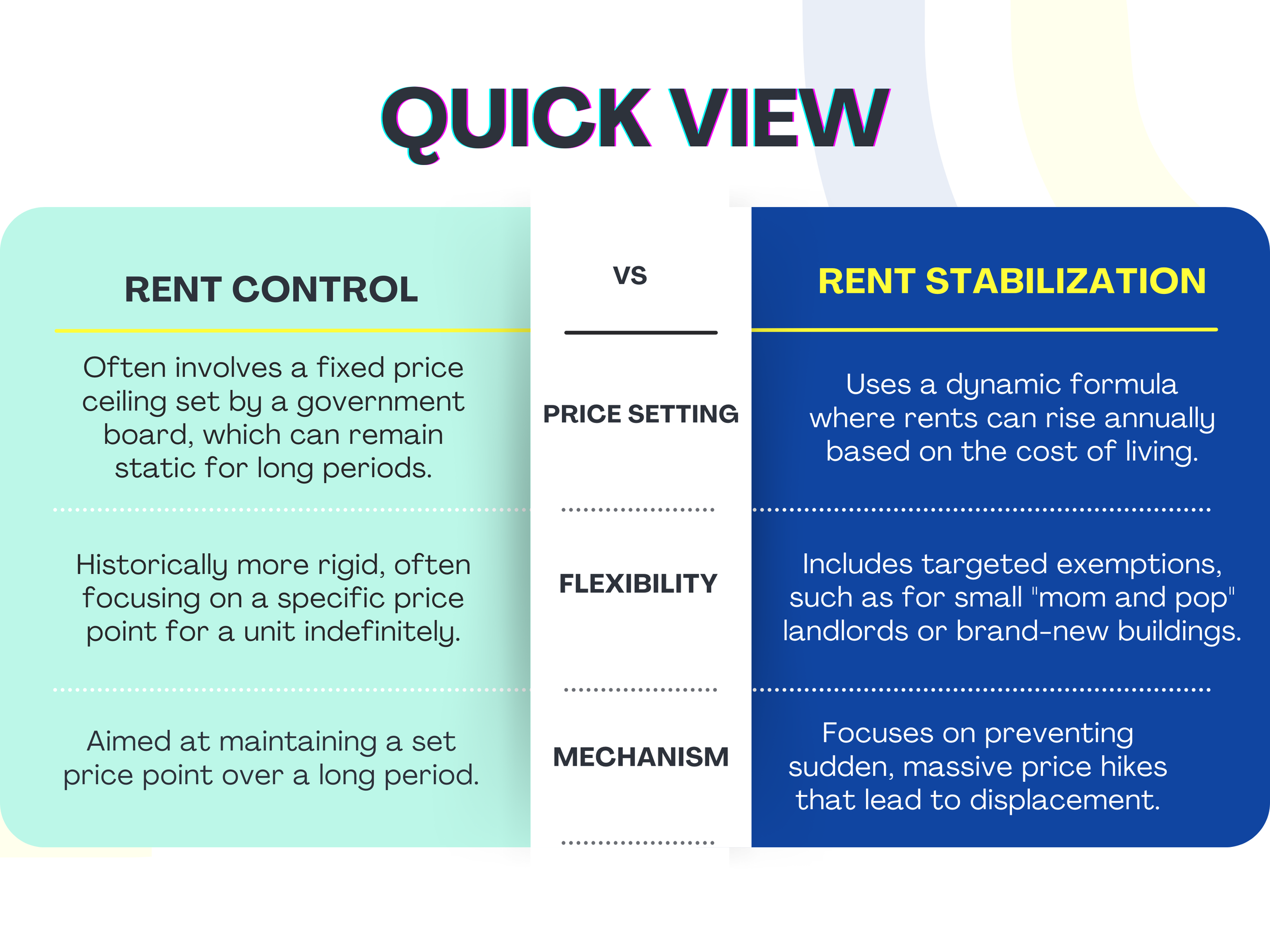
The statewide initiative we are supporting, driven by the advocates at Keep Massachusetts Home, proposes a modern stabilization model. It suggests a cap on annual rent increases tied to the Consumer Price Index (CPI)—with a maximum limit of 5% per year.
This model includes thoughtful exemptions for owner-occupied buildings of four units or fewer to support local homeowners, and a 10-year delay period for newly constructed buildings to encourage continued growth in our housing supply.
Why Stability Matters When It Comes to Rent
When people can stay in their homes, our whole city wins. They join the PTA, they become regulars at the local corner store, and they look out for their neighbors.
This "social capital" is what turns a group of buildings into community.
We can look to other cities for inspiration on how these policies provide a return on investment for the community.
In Berkeley, California, a study found that managing and running the rent stabilization program for 19,000 units cost the city about $4 million in administrative staff and basic operations. As a comparison, to achieve that same level of stability through housing vouchers, it would have cost $20 million; to build that many new affordable units from scratch, it would have cost $220 million.
Stabilization is an incredibly efficient way to keep communities intact.
We see this working in places like New York City, where nearly a million stabilized apartments allow families to stay for generations. This creates a stable workforce and local culture that wouldn't exist if everyone had to move every few years.
One Piece of a Multi-Faceted Strategy
Rent stabilization is a powerful tool that works best when it is one part of a multi-pronged approach to housing justice.
We see this as a "both/and" strategy rather than an "either/or" choice. We need to leverage a combination of all of these strategies together in order to address the housing crisis.
To create a truly affordable Boston, we need to tackle affordable housing on multiple fronts:
Zoning Reform is Essential: We must remove inefficient blocks to housing creation and maintenance.
Increasing Supply: Streamlining the production of diverse housing types across every neighborhood to meet growing demand.
Preserving Affordability: Just as we build new homes, we must preserve existing ones through tools like rent stabilization, public investment and subsidies for maintaining low-income developments.
Tenant Protections: Coupling stabilization with stronger eviction protections to ensure that a predictable rent leads to a truly secure home.
Economic Relief: Supporting recent progress like the ban on tenant-paid broker fees, ensuring that moving into a home doesn't require thousands of dollars in upfront costs.
Rent Stabilization is just one of many tools that allows people to stay in their homes while our city builds our housing stock capacity and diversity through new construction.
The Road Ahead: Choosing Stability
For too long, Bostonians have been told to "just wait" while the market sorts itself out, even as our seniors and essential workers are priced out of the communities they helped build.
Back in 1994, Boston voters overwhelmingly supported keeping rent protections. In 2022, Mayor Michelle Wu and the Boston City Council sent a request to the state legislature to bring rent protections back. While that request remains in study, Boston can’t afford to wait any longer.
Thanks to the Keep Massachusetts Home coalition and the advocates at Homes for All MA, we finally have a direct path to change.
By supporting the 2026 ballot measure, we are choosing a Boston where your home is a place of peace, not a source of constant anxiety. We are choosing to give our families the predictability they deserve and our city the stability it needs to thrive.